Dr. Nezhat is a world-renowned minimally invasive and robotic surgeon specializing in treating endometriosis and is the recipient in 2020 of the Distinguished Service Award for Meritorious Service in the Science and Art of Medicine from the American Medical Association. He was chosen by them as an exceptional innovator and trailblazer whose significant contributions have revolutionized modern-day surgery.
He is best known for inventing and pioneering video-assisted endoscopy and was the first to perform groundbreaking advances in minimally invasive surgical procedures that have helped millions of patients around the globe. He has been called the father of modern-day surgery for inventing and pioneering video laparoscopy and video-assisted endoscopy surgery.
Dr. Camran Nezhat: Thank you very much, Dr. Aimee. I would like to congratulate you for your groundbreaking work and everything you do to help the public. I admire you and I am a devotee of your work.
Dr. Aimee: Thank you. It’s very mutual, for sure. You’re obviously highly accomplished in so many areas of minimally invasive surgery. Today, I want to talk about your work on endometriosis. What made you go into this field?
Dr. Camran Nezhat: Looking back, many things pointed me in that direction. Since I was much younger, during medical school and residency, I was interested in endometriosis because some of my own loved ones had endometriosis. Also, during my career, I found endometriosis to be an enigmatic and perplexing disease, and it still is. I continue to be interested in trying to solve its mysteries.
On the other hand, you could see patients that had more severe endometriosis and they had no pain at all.There were couples that would come with no symptoms at all, no pain, no problems and were trying to get pregnant. All of their tests were normal, she was fine, he was fine, but they wouldn’t get pregnant. At that time, we would do a diagnostic laparoscopy, but without the video. In these types of patients, we usually found a small amount of endometriosis on the ovaries or around the abdomen, and that was the reason for their infertility.
We would make a large incision from hip bone to hip bone or an up and down incision for a small amount of disease. That is why I focus on endometriosis, because of the problem those patients were facing. Actually, my professor, Dr. Batts, had a book about how to do micro-surgery by doing large incisions in the abdomen for even a small amount of disease. That is why I became interested.
Dr. Aimee: Historically, you mentioned hip to hip surgery. Are there other historical treatments that you can tell us about?
Dr. Camran Nezhat: Yes. Endometriosis is an ancient disease. Endometriosis has been and continues to be an enigmatic disease for thousands of years. It is a condition that unfortunately is affecting millions of patients.
Because it is so common, we have kind of normalized it in our culture. If endometriosis was a man’s disease, I’d bet you by now we’d have at least a better understanding of what it is, at least we would have made far more progress because, as I said, it has been present as long as women have existed.
These patients have undergone all kinds of cruel treatments and they have paid for it. For example, long ago, they thought women with endometriosis were possessed by demons, so they used to throw away these patients off the top of a bridge into cold water to get rid of the demons. It was also thought for a long time that these patients had an angry uterus and the problem was that the uterus traveled all over the body creating the problem, so they used to hang the patient upside down on a ladder and shake them so that the uterus would go back to its original location. To treat these affected patients in the past, they used to use all kinds of insects and all kinds of manmade herbs and put it on the skin, and in all the organs of the body.
Endometriosis lesions often are so small that they cannot be diagnosed with an MRI, CT scan or an ultrasound. Because of this, people in the past (including Freud) started calling women with endometriosis hysterical and started treating them with antidepressants. They used to say that the only reason the patient had pain was because the uterus wanted to be pregnant, women had to get married, or women wanted to have sex.
We published a paper titled Endometriosis, Ancient Disease, Ancient Treatments. I recommend it to your audience if they are interested, it is in Fertility & Sterility journal, published in 2012 and they can easily look at it. It is a fascinating read to see what these women have gone through over the years.
Dr. Aimee: I have the article here. Endometriosis, Ancient Disease, Ancient Treatments. I’ll make sure in the article that goes with our interview today that people can access it, download it and read a copy for themselves, because I found it very interesting. Thank you for bringing that all up.
Where did you see the opportunity to change these treatments, especially around surgery?
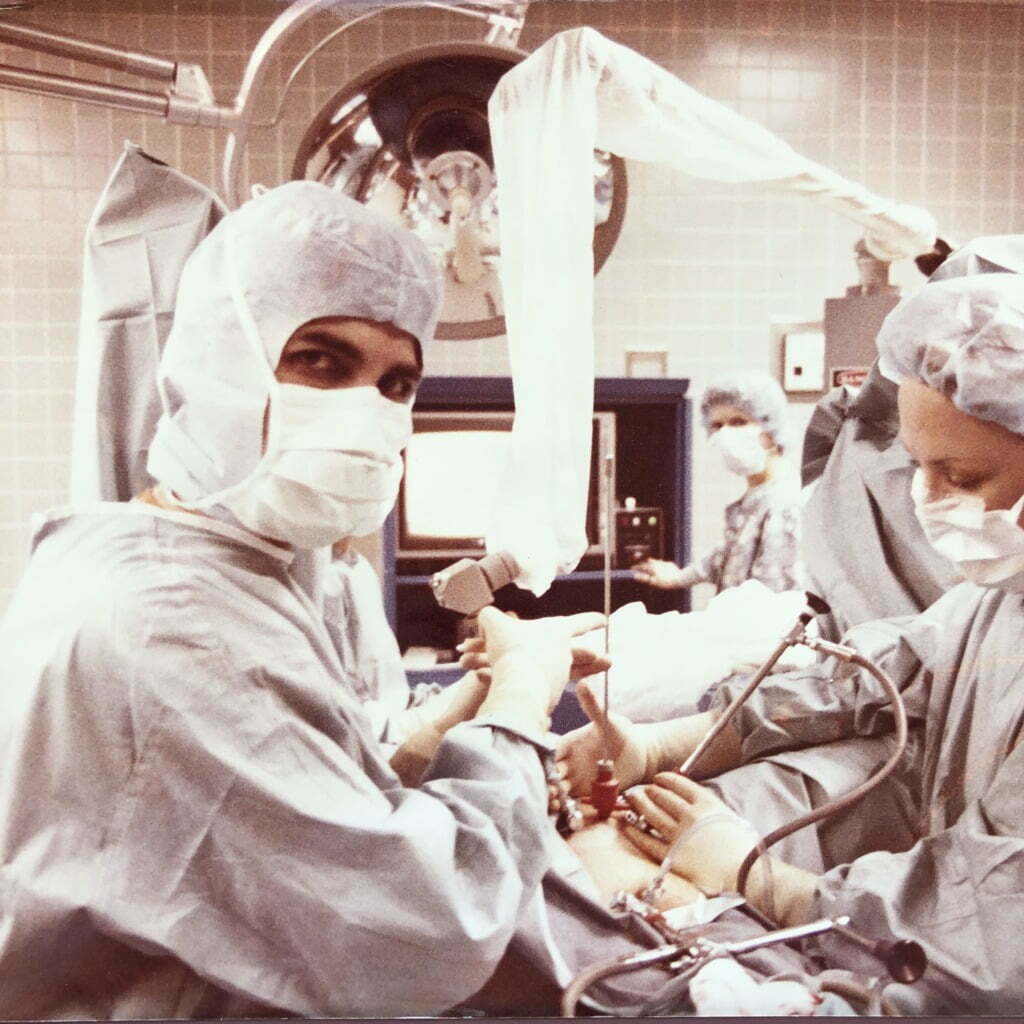
Dr. Camran Nezhat: We used to do a laparoscopy (consisting of a tube placed in the abdomen through the belly button) to check for endometriosis. When there was endometriosis, even if it was a minor amount of disease, we would make a large incision. It would take half an hour to make the incision and get into the abdomen and then half an hour to close the abdomen. All of this just to treat that minimal endometriosis in five to six minutes.
I thought to myself, “We are doing so much more harm. Why don’t we just treat that little disease with the laparoscope without opening the patient’s abdomen from hipbone to hipbone or from xiphoid bone to pubis bone? “
That is when it led me to invent and pioneer video-assisted endoscopic surgery. At that time, when we wanted to look in the abdomen, we’d have to look through one eye. It was very uncomfortable and awkward, and we couldn’t do much, it was very much a one-man-band. That led me to invent assisted endoscopy that revolutionized modern-day surgery.
Fundamentally, what we did is we just transformed surgery from a one-man-band to an orchestra. As the technology got better with the video endoscopes, the magnifications and the lights got so much better, so we can see minimum amounts of endometriosis so much better compared to before. We’ve started treating the affected patients with this method. This obviously changed the world for the patients with endometriosis and as a result for almost all the diseases that needed surgical interventions.
Dr. Aimee: What are the benefits from laparoscopic surgery?
Dr. Camran Nezhat: The benefits of minimally invasive surgery or laparoscopic surgery compared to the old techniques is that we make tiny incisions compared to the very large incisions that were made in the past. By the small incisions we make, the patient recovers much faster. Usually, in the old days, when I was in training, we used to keep these patients in the hospital sometimes for four to seven days. They had a lot of pain, they had to take six to eight weeks to recover.
With the procedures that I do now, the majority of my patients are going home within the first two hours. They start walking on the same day. You and I have been working together for a long time and we have common patients that are some of the most difficult cases. All of them go home within a couple of hours. The recovery of these patients is much faster and the results are much better.
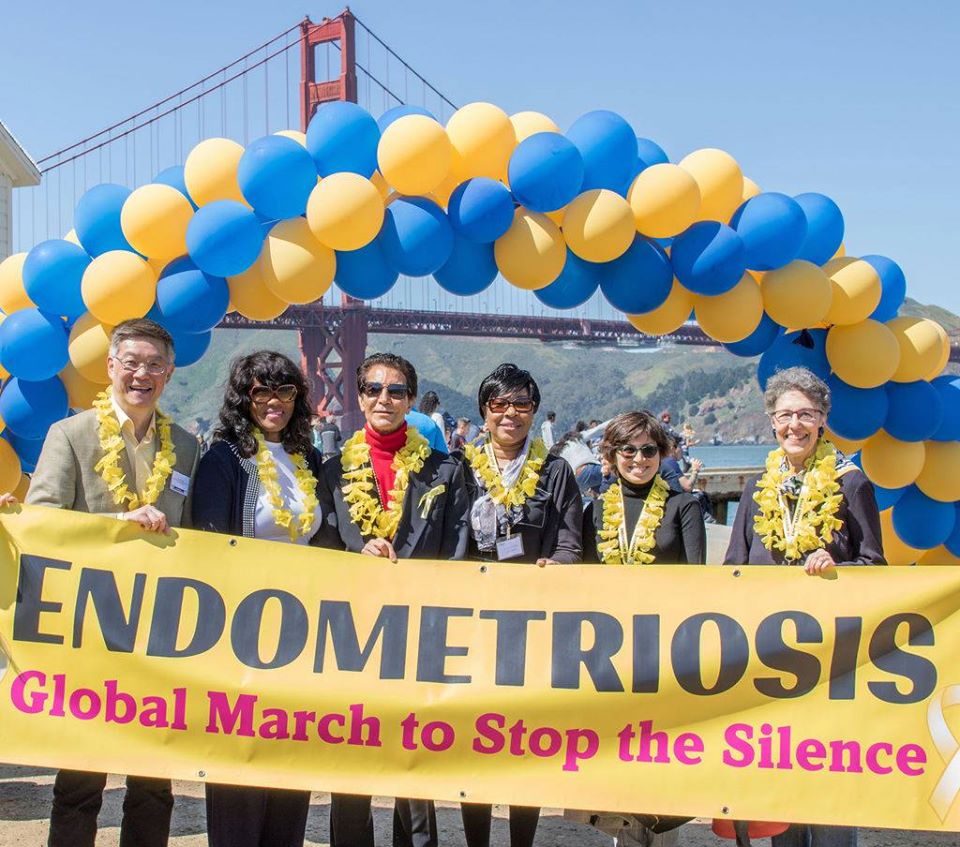
The reason that we decided to start this organization is because there have been so many publications about endometriosis, we have published so many articles and many other researchers have published about endometriosis, but we felt that we need ___ patients themselves should get involved more and more to reach success. In the past, when a physician like me who has a lot of interest in endometriosis passes away, then the interest and expertise in endometriosis goes down to some degree. I didn’t want that to happen again. This is why we started Endomarch.
More than 60 countries around the world have joined, and I’m very pleased to see more and more interest internationally on endometriosis. Governments are getting involved, they are putting more money into it. Different countries have started teaching about endometriosis at different levels of education like high school or college. As I said, if this was a man’s disease, we’d certainly know more about it.
Endometriosis is not cancer but behaves like cancer. The effects could be devastating on a young girl, a young genetically female patient, or in a young couple that want to have a child. We need to do something about it. I’m happy that Worldwide EndoMarch ignited that worldwide attention and that we see more publicity about endometriosis and more writings about it so that hopefully, we can move the pendulum forward.
Dr. Aimee: How can physicians, not just in the United States but around the world, get involved in EndoMarch?
Dr. Camran Nezhat: Everyone who is interested in EndoMarch is more than welcome to join. You can follow us on Instagram, Facebook, Twitter, to stay in the loop about all of our efforts. They can easily register to become a member on our website (EndoMarch.org) or email us at info@endomarch.org. We have many volunteers around the world so you can connect wherever you are with the activities of Worldwide EndoMarch and know you are not alone.
Dr. Aimee: For people out there who actually want to see you as a patient, where can they find you, how do they schedule a consultation with you?
Dr. Camran Nezhat: I’m very active, I operate four days a week. On average, I do about 8 to 14 surgeries each week, all endometriosis. It is very easy to find me at Nezhat.org, all my information is there. Telephone number, email address, everything is there. It would be a pleasure to see you and guide you and help anybody who would like to come.
Dr. Aimee: Thank you. I absolutely loved our conversation today. I adore you. I tell my patients that you literally for me have the hands of God, and you take incredible care, and you listen and you make my patients feel heard. Thank you for everything that you do.
Dr. Camran Nezhat: Aimee, you touch my heart. You are so kind to say that. I am privileged and honored to have been able to have a gift to help thousands of patients. I am happy to work with you and anybody, any way that I can help.
Also, I wanted to mention that for patients around the world that are trying to find somebody, unfortunately, endometriosis needs somebody who is really well trained. We would be happy to help, if you send us an email, we might know some physicians in your area to refer you.
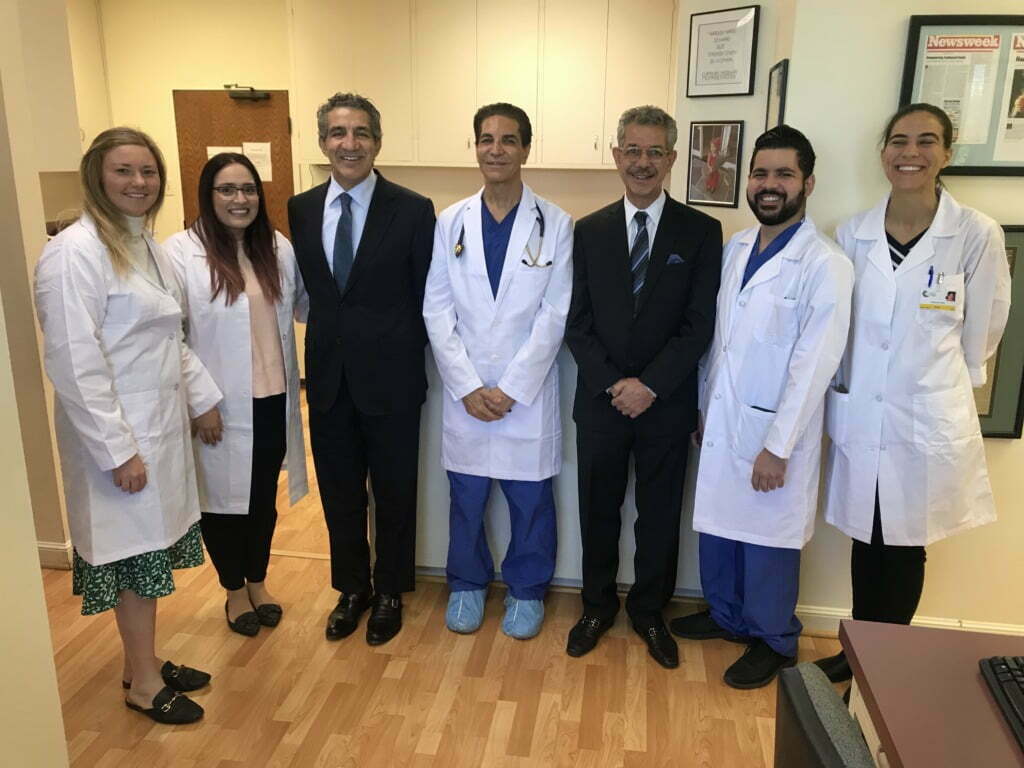
We are training surgeons as endometriosis specialists, the fellows who come to us, come from the best institutions trained in this country and they spend time with us, with the Society of Laparoscopic and Robotic Surgeons, the first society who has started a fellowship exclusively for endometriosis and American Society for Reproductive Medicine/Society of Reproductive Surgeons.
Dr. Aimee: Thank you again for joining us today. We love you. Thank you so much.
Dr. Camran Nezhat: It is really a pleasure to be here with you. Thank you very much.