
Sara Jensen of Hugh and Grace hosted me on Instagram live to talk about the top 5 fertility friends and products for your fertility journey. Sara Jensen is Co-Founder and Co-CEO of Hugh and Grace, and this conversation took place during is National Infertility Awareness Week. Sara, as the founder of a fertility-care lifestyle brand, brings insight into how environmental factors and product choices impact fertility. We cover everything from social openness and egg freezing to holistic tools that support reproductive health.
In this episode, we cover:
- Trends like openness about fertility, egg freezing, IVF for quality of life, delayed parenthood, and surrogacy
- How everyday toxins in products can affect fertility and what to watch for
- The Glow & Grow Set by Hugh & Grace and other fertility-supportive product recommendations
- Why staying current on fertility trends matters for patient advocacy and planning
- The importance of choosing hormone-friendly products and being mindful of environmental exposures
Resources:
Find Dr. Aimee’s Fertility Essentials & Supplements


Transcript:
Sara Jensen: I’m going live today with Dr. Aimee. She is also known as the Egg Whisperer, and I’ve known her for a few years now. We met through a mutual connection. Dr. Jenna Hua, who is great.
Dr. Aimee: Hi, Sara. Thanks for having me on. I’m so happy to be here.
Sara Jensen: Oh, thank you for coming on. And you look lovely as always. I love seeing you. Thank you. With it being National Infertility Awareness Week, you are so respected in your field. People who know Hugh & Grace, you know, we really work on promoting hormonal health holistically through skincare, wellness, and healthcare. I would love for you to give your bio for people who do not know who the wonderful Egg Whisperer is.
Dr. Aimee: Thank you. I mean, I’m basically a baby-maker and a love-bringer-into-your-lifer, so I’m just someone that is hoping that through helping people become parents, I’m making this world a better place, ’cause you and I both know there’s nothing better than families and families that want children. And you know, with what’s going on right now, everywhere you look, you see so much war, hatred.
And I’m just trying to do my part in the world and I feel like the best thing I can do is bring as much love into it as possible and having babies is one of the best ways of feeling love. It’s one of the most incredible loves that you can ever experience. So long story short, that’s what I do.
I’m a fertility doctor that’s super passionate about fertility education and I really want: I women to know their diagnosis, know what their treatment options are, and I wanna prevent the tears that people get when they say, “I wish I had known this sooner.”
So I’m just so glad that you came into my life, that Hugh & Grace is here ’cause I love your products and that’s why we’re here also, because this is also a passion project for you. So I’m just so glad that I get to talk about how much your products mean to me. I use them every night.
My kids, we use them as lotion. I use your soap, it’s my face soap. We use the cleaning products in the bathroom, and around the kitchen. So just thank you for all you’re doing as well.
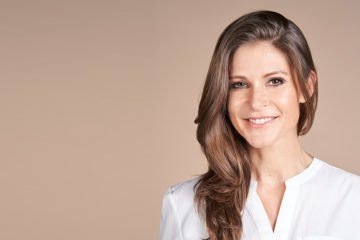
Sara Jensen: Thank you. It’s interesting, for those who don’t know our story, my husband and I struggled with unexplained infertility for 14 years and could never get pregnant.
I think it was after my sixth round of IVF. The doctor said, “What skincare products are you using? What chemicals are you spraying around the house?”
And I didn’t fully realize during all my IVF rounds, I was rubbing a hormone cream on my legs. Then I got my blood levels tested the next day, and my hormones had spiked.
I was not putting two and two together that everything I put on my body impacts my hormones.
And I, I love the fact that you, first of all, are very compassionate. You’ve worked with some really high profile people who have not been able to get pregnant in the past,
And so with it being National Fertility Awareness Week, how have you seen trends move the past few years? Ben and I were going through our infertility struggle, you know, Hugh turns seven next month, Grace turns five. And we were so private for so long. But I do love seeing that people are now sharing their journey, although, and I know how painful it is, so I know sometimes it is hard to share what you’re going through.
What trends are you seeing?
Dr. Aimee: So that’s one trend is people are more public, they’re more open, they’re more prone to share their journeys with families and friends. So that’s a huge thing. And also publicly on social media. And I think that’s a great way of building some more port, finding your community even if you do it anonymously. So I think that’s number one.
Number two, more people are freezing their eggs than ever before. And egg freezing is now not just about not finding a man, it’s not about the man. For us as women, it’s about wanting to be a mother and also giving yourself options and however you wanna do it, that’s fine. So things are changing a lot there.
Number three, the concept that IVF is not just for people who have infertility, but using it as a way for people who are coupled or independent to also preserve their fertility. So there are some people who get married, let’s say at 32, and they’re not ready to have babies, and they don’t wanna do it until they’re 37 or 38. They’re actually using IVF as a way to preserve their fertility.
We’re also seeing this trend of people starting later in life. So the milestones that they’re reaching in terms of when they graduate college, when they finish graduate school, when they buy their first house, when they get married, when they pay off their loans, then everyone’s like, and now I’m ready for a baby.
But your ovaries are like, I was waiting for this day, and so I see more patients than ever who are over the age of 40, especially over the age of 45. So that’s another trend. So more women over 40 are doing IVF than. Ever before, and especially women over 45 and wait for it at 50.
I have more patients over 50 in my practice now than I ever had before, and I started my practice at 32.
And here I am, my birthday is actually this week and I joke and say National Infertility Awareness Week was created around my birthday. ’cause it’s during my birthday week every year. And, like I’m 48 and I see so many women who are my age trying to have a baby and I’m like, I would love to help you. And I can relate to them. They have energy, they wanna be a mom and they feel really good about themselves and they don’t feel like there’s anything wrong with doing it at 48.
So I have my ways of counseling women who want to have a baby. ’cause sometimes they come to me. I’m sure you’ve seen these celebrity stories as well. They come to me thinking that I have this amazing power to turn 48-year-old eggs into 21-year-old eggs. And maybe one day I will, but right now we don’t.
So we talk about creative family building and there’s so many amazing ways of building your family, last trend. And there’s still maybe two more, but I’ll go really fast.
Last trend is, well, I’ll just say this last one is surrogacy. We’re seeing more people, especially women over 45 as they’re, trying to grow their families. They’re doing it through surrogacy. So that’s another trend that we’re seeing is more surrogacy journeys are happening now in this country than I’ve ever seen before.
Sara Jensen: What advice are you giving these people? Because egg quality is hard to improve sometimes. So are they using egg donors? Are they able to get pregnant without fertility treatments?
Like what advice are you giving these people?
Dr. Aimee: I mean, I would say just do a very gentle reality check with yourself, even though you’re feeling amazing on the outside.
Your ovary in the egg cell is the fastest aging organ, basically in our bodies. And this is what I say all the time, just because our desire to have a baby hasn’t run out. That doesn’t coincide with when our eggs run out, and that’s really hard.
So I just tell people to be gentle with themselves. Talk to a doctor who will believe in them if that’s what they need. And there’s nothing wrong with trying.
I’ve done IVF with her own eggs on a woman as old as 51, that was high in her priorities. Who am I to say no? You know, if you have an egg and you want eight chances and you want to experience that, I won’t say no to you.
But at the same time we go into it saying, “I don’t expect this to work. It’s important for me to do this ’cause this is part of my journey. I need to experience this for myself. I understand you Aimee. I hear you and Aimee, you might think I’m a little crazy” and I’m like, “no, we’re both crazy ’cause I’m here helping you.
We have to promise you we’re gonna go on CNN. I’m, like, screaming at the top of our lungs together if this does work.”
So my advice is just take good care of yourself. Don’t allow this journey to rob you of your joy and try and do whenever you can to be a young parent. So don’t spend your forties trying to do 20 IVF cycles so you can end up having a baby at 50.
I tell people, give yourself like six months. Say over the next six months, I’m gonna do two or three IVF cycles. And if I can’t get a blastocyst that passes genetic screening, I’m gonna start thinking about other options.
And then definitely work with the fertility therapist because they’re there for you, literally there, and they’ll be there with you the entire journey. Don’t work with them at the end of the journey when things aren’t going well. Start working with them from the very beginning. Make them a part of your journey so that as you’re going through these highs and lows, ups and downs, they are there to kind of lift you up and to prevent you from spiraling because this journey can make a perfectly sane person feel insane at times.
And there’s so many things I’ve learned from patients and I’ve had patients say to me, okay, now I need to figure out what I’m gonna do to stay sane for the next two weeks as I wait for the genetic results. And I’m like, “You’re right. I need to teach people how to cope and how to make sure that they stay sane for the next two weeks.”
And one of the ways you do that is talking to your therapist.
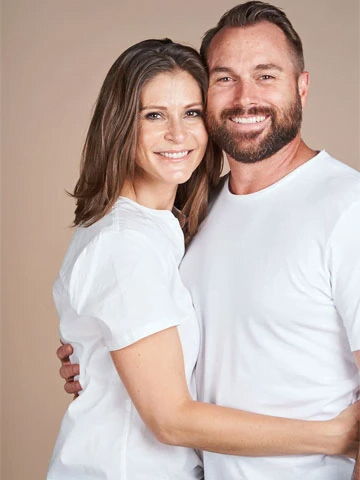
Sara Jensen: Yes. And we did six rounds and my body would take longer and longer to hit the numbers. So I have to go to the shots more and more days with every single round. And so I think even the hormones spike. My husband, we dated for four years on and off prior to getting married and then I think we finally started our fertility treatments six years into the process. But Ben tells people, ” I’m so happy, thankful that I knew my wife for so long, because when you’re on these hormone shots, your personality changes, you’re in such an emotional state and you’re not feeling like yourself.”
Dr. Aimee: Yeah, I tell people, you’re just feeling a little spicy, a little snarky, a little sassy, but you have grit and you’re resilient, and that’s why you’re doing this, and it’s so worth it. spice never killed anybody. You drink a little water, it goes away. So that’s the experience of being an IVF patient.
Sara Jensen: And you were so instrumental, with this more holistic way because you are coaching people with nutrition. With mindfulness. I think that’s being so much more talked about now. Yeah, giving yourself grace. And then also knowing your journey.
If someone’s on here and they’re struggling and they don’t know where to go or what to do, what would be your guidance for them?
Dr. Aimee: My guidance if you’re struggling is go right to a fertility specialist.
That’s my guidance. I think it’s a myth and people believe that they have to get a referral from an OB GYN. Sometimes it goes well and the OB GYN is very well intentioned and helps you right along your path. Other times you might get stuck with, again, a well-intentioned OB GYN, who does things like prescribe Clomid for a year without a semen analysis or a tube test or a single ultrasound.
So that’s why I created my TUSHY Method. So the TUSHY Method is the five diagnostic tests that you need to do to get to a fertility diagnosis, and this is to remind people that getting a diagnosis should not be complicated. It should be very simple. And they’re the five tests, and you can do them all in a menstrual cycle.
So you can go to your OBGYN and say, can you check my TUSHY? They’ll probably have no idea what you’re talking about. Most fertility doctors do because they’ve heard their patients talking about it through, through the stuff that I do.
But yeah, getting to a fertility doctor, we have the technology and the office to do all the things that you need to check your tubes, look at your uterus, do a semen analysis, check your hormones, review your genetic results, and then you can come up with a plan.
And then you go through the three questions that I teach everyone:
- What do you want?
- What is it gonna take?
- And are you willing to do it?
And then you have to refine your answers. And that’s how you pre-plan your ultimate plan. And you’re not going to know “what is it gonna take to get what I want,” unless you know the diagnosis.
So if you haven’t done a single fertility test, “You can’t say, well, I’m never gonna do IVF.”
Well, what if you have a diagnosis that requires you to do IVF like a husband that, or partner, a male partner that has no sperm. It needs to be extracted from the testicle. Well, you need to do IVF. Well, if your tubes are blocked, well you need to do IVF.
So, my recommendation is keep a very open mind as you go in and think about this as a spiritual journey. You’re learning about your body. Love yourself, love your partner, and find ways to build humor into the experience as well. I have lots of jokes. I’m always refining them and I practice ’em on my patients and I’m not that funny, but they tend to laugh.
I feel sorry. I mean, sometimes I feel like they have to laugh at the jokes that I share. I’m not very good at this stuff, but you can be creative. My patients are way more creative than I am, so they make me laugh too as they come up with these little things.
Sara Jensen: My husband’s sister volunteered to be our first surrogate and they live in Tucson. We’re in Los Angeles, and they would joke. So her husband is incredible, and he’d go to work and they would joke and his coworkers would be like, well, ” At least my wife’s not knocked up with her brother’s baby.”
I want to credit you for several things, but one of the things that we launched for National Infertility Awareness Week.
You came to us and said, “When people are trying to get pregnant, men come in the office and they say, my partner’s going through all of these hormone shots and things. What can I do?”

And so we actually created, we’re calling it Glow and Grow. And the set is good for men, good for women, good for anybody. But especially when you’re trying to get pregnant.
So to increase male semen quality, it’s so much easier than increasing egg quality. Can you talk about the importance of men using clean products, but the use of products that men use while they’re trying to conceive?
Dr. Aimee: We know that they’re endocrine disruptors everywhere we look and everywhere that, you know, it’s hard to avoid them.
And so I think a lot of times the guys are left out of the discussion because we are the ones that drive the conversations, that make the appointments. And oftentimes we’re blamed for everything, especially when we’re over 40. And so I think most women over 40 are partnered with men over 40 as well, and so they need to be just as conscientious about the products they use, the environmental toxins around them, and that also includes things like nicotine, marijuana, and heavy smoking.
That’s one way that you can decrease your toxin load is by paying attention to the products that you use. So using your products, that’s one strategy that could potentially help.
The problem is the things that we’re exposed to, we’re exposed to them for years. And so the sooner you make the change, the better.
Sara Jensen: I agree. There’s some key hormonal developmental times and so even teenagers, kids we’re, yeah, we try to design everything so it’s safe for everyone. But I think especially people start paying attention to when they’re trying to conceive. But even pre conception ’cause that’s when you’re increasing your quality of sperm eggs.
I mean, I wish I would’ve known because I was an ultra marathoner. The doctor said, “The running chicken doesn’t lay eggs.”
I stopped running, I was doing acupuncture. You hear these folklore or you like having sex and your legs are in the air for half hour,
Dr. Aimee: Or you’re doing upside down jumping jacks. You probably could have done that as an ultramarathon runner…
Sara Jensen: But I just think. I just wanna control. Right? And you can control to a point like what’s in your environment. You can control the products you’re putting on your body but then also great access to qualified information. And then I, I do like what you said, it’s your journey.
You’re giving yourself grace, and I think because I felt so alone for so much of it, that you’re not alone.
Well, Dr. Aimee, I wanna be cognizant of your time. I appreciate you especially coming on here. I love the work you’re doing. What you do brings so much joy to so many people. And just even I, I don’t know, just do you bring hope, you bring compassion and you bring something that this industry desperately needs? So really proud and honored to be partnering with you.
Dr. Aimee: Thank you. I appreciate it. Thank you for creating this partnership. You’re awesome. See you soon.
Catch more of me and topics like this through The Egg Whisperer Show. Episodes are aired on YouTube, Facebook, Twitter, IGTV and Apple Podcasts . Sign up to get my newsletter. Tune in to The Egg Whisperer Show on YouTube. and Sign up for The Egg Whisperer School.